

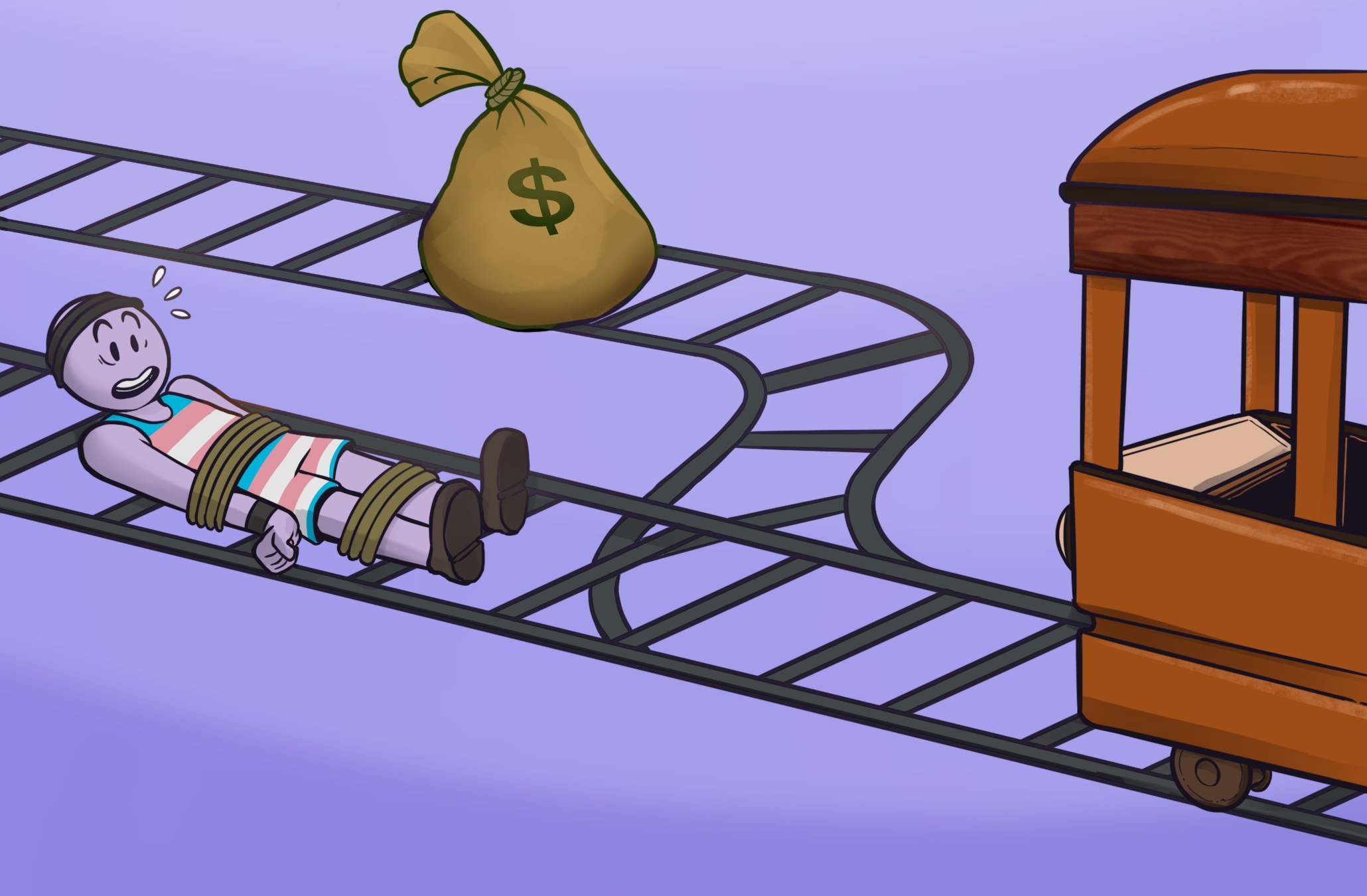
Following a recent executive order from the Trump administration barring transgender women from participating in athletic competition in schools, the NCAA announced it would comply. The Equinox feels this is an overbearing solution to what is largely a non-issue.
Trans women in sports are a rarity, to say the least, and the magnitude of the discussion around the supposed issue is far more representative of a political agenda pushed by ultra-conservatives than any legitimate desire to improve women’s sports or level the playing field for athletes. There are plenty of widespread issues affecting women athletes such as the wage gap or gender-based misconduct, but no executive action has emerged to remedy these problems that are less visible as political hot topics. It seems the only reason we are forced to discuss this issue in the first place is because it is being used as an excuse to further push trans women into the shadows.
There are fewer than 10 trans athletes currently involved in collegiate sports at the NCAA level. The likelihood that any given NCAA athlete will ever compete against a trans athlete is minuscule. While we can understand the frustration that could potentially arise from competing in an unfair match-up, the stakes are not high enough to warrant demonizing a community already highly at-risk and marginalized in society.
Even if this was a large enough issue to justify such broad system-wide change, the NCAA would perhaps be better off dividing sports by weight class, strength or other physical factors more directly relevant to their sport than how they identify. The NCAA previously had a three-phase implementation process for how the organization would address the participation of trans women in sports. This previous guidance seems like an obvious, more nuanced and scientifically sound alternative to a blanket ban, and the NCAA appears cowardly by immediately complying with the order even if it is easier for them from an administrative standpoint.
Even outside of the college space, this ban affects athletes all the way down to the kindergarten level. Sports largely function as a socializing experience for young kids rather than a true competition and taking that experience away from trans children seems needlessly cruel. It is already difficult for trans people to connect with their peers; there is little cause to take away the connections they are able to form.
Sports are also a valuable outlet for physical activity and health. Once again, removing this opportunity for trans people to engage in healthy lifestyles is another instance of needless cruelty and reduction of quality of life for no reason.
While there may be little Keene State College can do to remedy this deeply flawed solution on the NCAA level, we encourage the powers that be to do what they can to protect any current and future trans athletes participating in club or intramural sports and to remain alert for potential ways to protect athletes at the varsity level as well. Diligence is essential to ensure trans athletes are not left out in the cold.