Although burial grounds might not seem like much to some people, to certain indigenous peoples they can be incredibly significant in holding on to their culture.
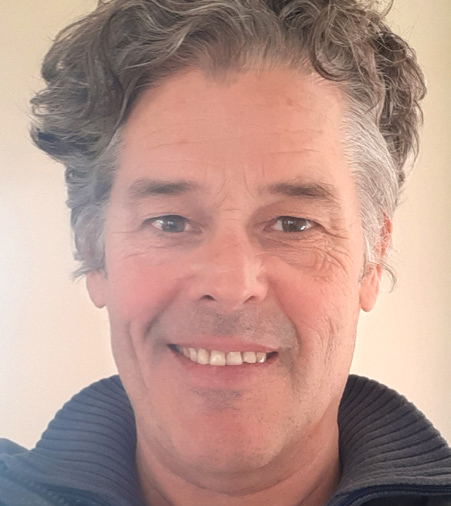
On Thursday, Dec. 5, KSC’s Cohen Center held a lecture titled “Case Studies in Forensic Anthropology: Hawaiian Burials, Cultural Renaissance and Independence Movements” that touched on that very subject. Christopher Monahan, the speaker and Keene State anthropology professor, discussed Hawaiian history and culture and how their burial grounds are an important part of that culture.
Monahan, who had lived in and done archeological work in Hawaii, spoke about those experiences.
“I came to take a job in Hawaii in 2001, and I learned all about Hawaiian history and about Hawaiian archaeology that I really knew nothing about before,” said Monahan. “Hawaii … was a life-changing event.”
The lecture was held in the Mason Library room 240 and could be attended both in-person and on an online Zoom call.
Monahan started with a brief discussion of Hawaiian history and the kingdom’s annexation by the United States in the 1890s in a coup led by businessmen. He discussed how there had been several attempts to suppress or outlaw aspects of Hawaiian culture by missionaries or the U.S. government and how there were prominent figures in that history who brought those aspects back into their culture. One was King David Kalākaua, who helped to revive the practices of hula and surfing.
“[Hula] had been essentially outlawed at the beginning of the 19th century by missionaries and other Western powers,” said Monahan during the lecture. “It’s a lot more than dancing, hula is a spiritual, religious, philosophical lifestyle.”
However, the main focus of the talk was on forensic anthropology and archaeology as it related to Hawaiian burials. According to Monahan, historically there were no marked burial sites in Hawaii. While the people who lived in a certain area would know where the sites were, it was considered rude to ask about it. The common people would be buried in areas near to civilization but the chiefs would be buried in more secret areas away from the common people, sometimes even high in the mountains.
Monahan stated that up until the 1970s, archaeologists would treat burial grounds as simply historical artifacts and would do whatever they liked with the remains found, such as putting them in museums. He spoke on some incidents where Western or American development would be done on burial grounds and there would be disputes on how to treat the remains and the area.
In the 1980s and 1990s, Hawaiians organized Island Burial Councils. These would be comprised of Hawaiian people and anyone wanting to build on the islands or do an archeological dig would have to consult with them on how to treat any potential remains found. They also organized official rules on how human remains found on burial grounds should be treated differently than simply an archaeological find. There are also several reinterment crypts around the island. They are small structures made to house any human remains that are found on a construction site.
After the lecture, students expressed how they learned a lot about Hawaiian history that they hadn’t known previously.
“The talk was really interesting, I didn’t know that there were so many burial sites [in Hawaii],” said first-year Emma Lebourveau. “I didn’t know about the kings and queens … It was fairly recent, it wasn’t very long ago.”
Orion Corbin can be contacted at