

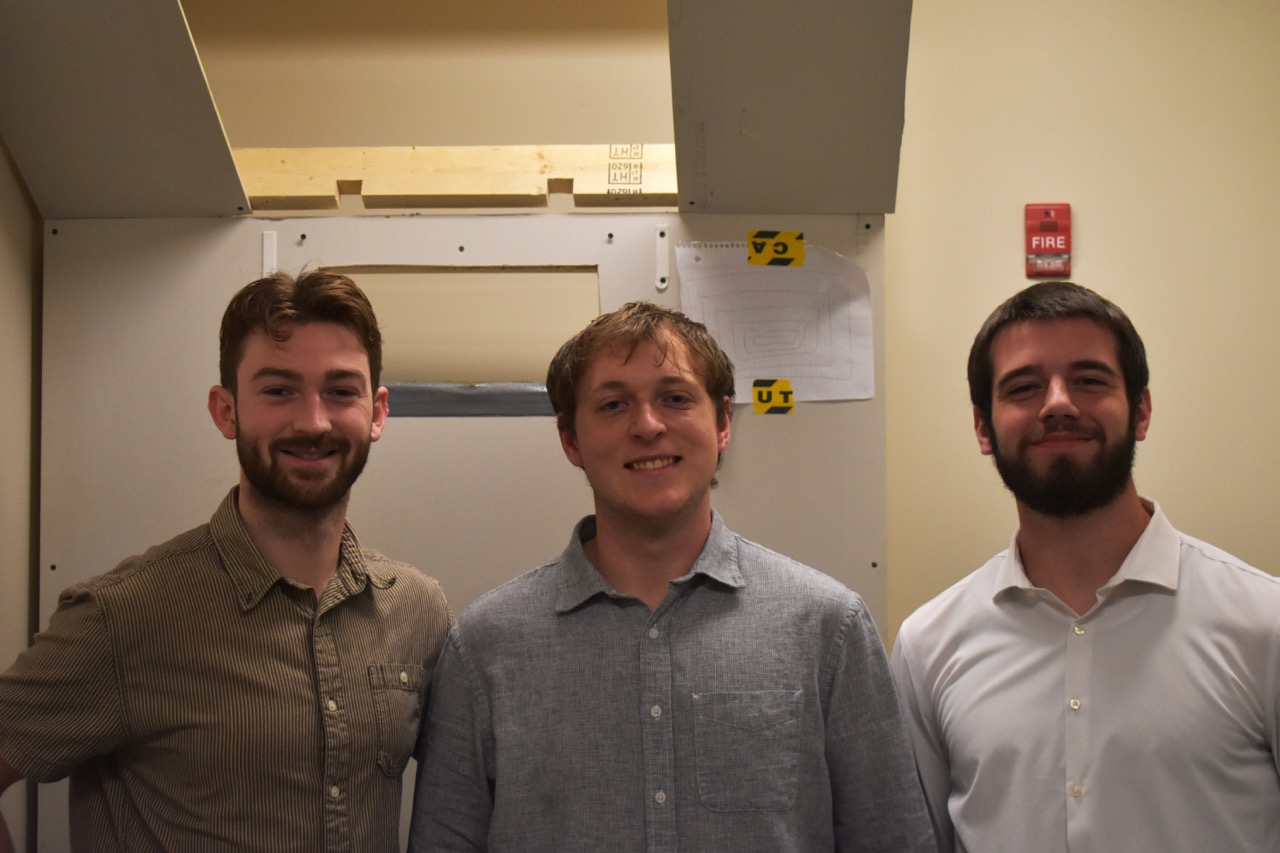
Three students from three different majors have been combining skill sets to drive forward the use of exoskeletons in an effort to combat the limitations of those with musculoskeletal diseases.
The KSC AmitErgoLab Research Team, led by Lito Amit, assistant professor of safety and occupational health applied sciences, has been working for several months with exoskeletons, a prominent topic within the construction and manufacturing industry.
An exoskeleton can refer to a wearable device that enhances human capabilities, especially for those with musculoskeletal disorders, such as injuries or pain in the human musculoskeletal system, including the joints, ligaments and muscles.
The team’s research has been looking at the effects of the exoskeleton at short-term usage, but the end goal “is to figure out how they work for individuals in long-term usage,” said junior Patrick Boland, safety and occupational health applied sciences major, who is within the team of researchers.
In addition, Boland stated he was “unsure of what effects it could have on their bodies if they rely on it for the long term, they do know that for short periods how much it helps while doing tasks, and can see how much muscle exertion they have, and how much it affects those cognitively.”
In addition to the research, members of the team come from different backgrounds and have separate interests. With the diversity of their majors, they can contribute different angles from which they can approach this subject.
Scott Philibert Jr., a senior exercise science major, stated, “When doing studies about looking at the upper body, it is beneficial that we are all different majors because we can come in different ways of help by using what we have learned from the years at Keene.”
As a result of having separate points of view, they have each individually stated how they believe it to contribute toward this research.
Philibert stated, “It helps go hand-in-hand because when doing research it is easier for me to understand and apply what muscles work together. As well as to understand if it is actually being beneficial.”
Boland’s knowledge allows him to “know how often people are affected by musculoskeletal and when they need to use the exoskeletons and how they should be best used.”
Graduate student Reed Miller, who is a sustainable product design and innovation major, believes he “thinks more about the mechanical aspect of the shoulder skeleton, and about how the parts move, how they fit together and interact with the human body. And how like looking at future technologies to be changed.”
The team’s research ended up piquing the interest of Exo Berlin, a yearly conference held in Berlin, Germany. People from all over the world presented their research on the exoskeleton subject. The team presented their findings at the conference last semester in April of 2024.
Philibert stated, “We also presented at Mount Washington this summer for the New Hampshire INBRE program, which funds them for this research as well as many others throughout New Hampshire.”
Amit, the principal investigator for the research, was described by his team as “beneficial to their studies as he is ambitious, very motivated and supportive.”
Katie Aguilar can be contacted at
kaguilar@kscequinox.com