

Somewhere in the early 1960s, long predating the familiar era of Sizzler lunches, Hootie Days and Canvas anxiety, Keene State College (known back then as Keene Teacher’s College) found itself navigating a revolutionary transition, setting the stage for the current incarnation of Liberal Arts education we have come to know.
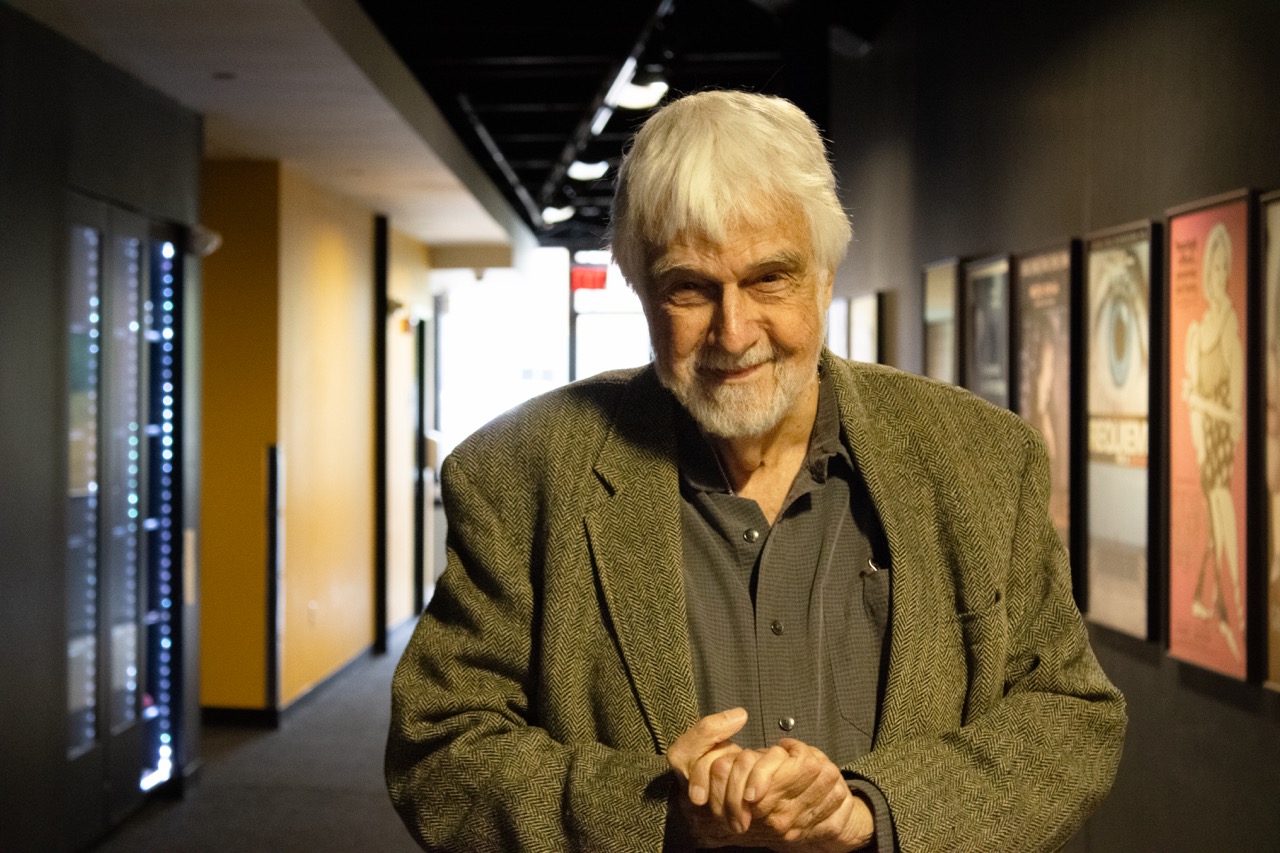
Professor Emeritus Lawerence “Larry” Benaquist was hired by the college in 1969 with a newly minted P.h.D in Renaissance Literature, as part of a new wave of professors hired to facilitate a transition from a “teacher’s college,” where public school teachers trained for careers in K-12 education, to a school of liberal arts.
“There was a certain tension between the old-timers and the new-timers,” said Benaquist upon reflection of the early days of his career.
“Here’s all these old professors who were here for years, and then all of the sudden, here comes these new professors coming out of the ‘60s with our new P.h.Ds, and our missions were quite different,”Benaquist added.
Originally hired as part of the fledgling English department, Benaquist found himself at a crossroad when three students approached him with a desire to form what would become the Keene State College Film Society. The students wanted Benaquist as their faculty advisor, and the Film Society became a place where community members could watch films that had left the traditional theater.
“This was before the age of VHS, DVD, BlockBuster, obviously before Netflix. Film would be seen in a theater, and then most people never had much of an opportunity to see it again. We found that there were places in the country that rented out prints of films like “King Kong” or “Rebel Without a Cause,” so we’d rent those films, bring them to the Science Center, and show them. There were films being shown on television at the time, but not a lot. This was a chance for people to return to the movies and see these films all over again,” according to Benaquist.
Benaquist said he took pride in bringing film to the community and moved to allow locals from outside the immediate college community to participate in the film society. Eventually, as part of his searches for films to rent, he came across a Boston Globe advertisement for a Film History course offered by Cambridge University. Armed with $65dollars of KSC-sponsored tuition and an employee vehicle, Benaquist commuted to Cambridge after teaching a weekly class and found himself enchanted with the world of cinema.
“I absolutely fell in love with it. It was magic, and I still remember the films we saw. I started reading film history, film theory and buying films to watch on my own, just for myself. I was convinced that this was something that was going to interest me,” said Benaquist.
At the time, new courses and programs came about in two distinct ways. Some areas of study grew as part of a conscious initiative by the college, with faculty hired to bring certain academic disciplines to the school, and others were initiated by professors such as Benaquist.
“After my course at Cambridge, I felt so sure of my passion that I asked my Chairman to let me teach a course at Keene State. It isn’t normal for a professor to take one course and be approved to turn around and teach it, but the Chairman had faith in me.”
From that point on, Benaquist began teaching film courses at KSC. The teacher had become the student and circled right back to teaching in a way that would set the stage for the education of countless film students to come. Starting with teaching film history, Benaquist expanded his own interests, learning about specific directors, and deep diving into his own film education.
“At this point, I began asking what a discipline in film would be. I had no model in my mind, outside of what other schools were doing. Film as an academic discipline was a relatively new thing outside of expensive and elite universities that catered to a privileged sector of the population.”
In 1996, the film courses pioneered by Benaquist transitioned to a complete program of study at Keene State College. Since then, countless students have joined the ranks of Keene State Film Students. To this day, Benaquist said he takes pride in the students his contribution to the college has facilitated and marvels at the achievements a Keene State College Film Studies degree can produce.
Chip MacDonald, ‘23, is one of many film studies students to benefit from the work laid out by Benaquist decades ago, having graduated with a Bachelor’s Degree in Film Studies. Still working behind a camera today as a pet photographer, MacDonald said he is grateful for the community of like-minded film majors who helped shape his academic career.
“Being in such close proximity with other people who shared the same goals and creative aspirations really helped to reach those goals, and I learned a lot from others while still having the freedom to walk my own path,” said MacDonald.
MacDonald went on to reflect on the importance of networking in college.
“I still keep in contact with lots of the people I met here to this day. Networking, having the ability to bounce your ideas off other people who get it, it’s all been instrumental in my development as a creative person, and I’m so glad that programs like this exist to open this world of opportunities for people like me,” MacDonald added.
Ryan Pacheco can be contacted at
rpacheco@kscequinox.com