
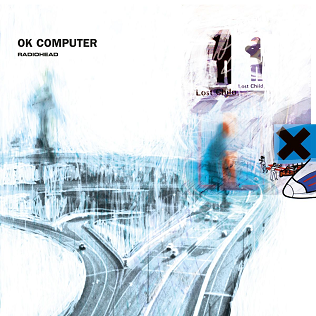
What else can one say about the British rock band Radiohead that has not been said before? While the band has produced several albums that I would consider essential listening, their magnum opus has got to be “OK Computer”.
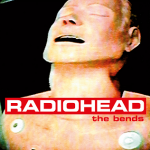
Releasing in 1997, “OK Computer” was Radiohead’s third album. Coming off their most critically acclaimed and mainstream-friendly project “The Bends” the band took a new turn in style from a Britpop sound to a dystopian, futuristic one. This album is really where Radiohead set themselves apart from their contemporaries and eventually proved how ahead of their time they were.
The opening track, “Airbag” is a semi-autobiographical track where lead singer
Thom Yorke describes feeling born again after a car accident he was involved in. The title of the track refers to the fact the airbag saved Yorke’s life.
There would be no better way to introduce the rebirth of Radiohead’s sound than a song about feeling reborn. Yorke’s vocals shine through on the track matched with the infectious drum loop before ushering into the unforgettable “Paranoid Android” one of the more popular cuts off the album.
Despite being the longest track on the album by far, standing at six-and-a-half minutes long, the listener cannot help but remain engaged with the shifting sounds. The song is compositionally split into four sections, with the opening portion showcasing some lowkey mid-tempo guitar licks.
Yorke’s straining vocals play over the instrumental with the occasional robotic voice chiming in to aid the futuristic sound. In my favorite portion of the track, competing electric guitars duel with each other as Yorke exclaims “Why don’t you remember my name?” The track then calms back down and fades the listener back down to Earth – a true auditory rollercoaster.
Subterranean Homesick Alien offers listeners a more emotionally driven song about Yorke’s feelings of isolation. But the album’s fourth track, “Exit Music (For A Film)”, has got to be my favorite off the record and one of my favorites from the band overall.
Fittingly, the song was actually made for a film: Baz Luhrmann’s “Romeo + Juliet” (1996). The band was inspired to make the song after viewing the final 30 minutes of the movie but it did not end up appearing in the film due to its presence on the album.
The song starts out as a chillingly gentle ballad but gradually builds into a crescendoing climax. The dramatic and emotional nature of the song is channeled through Yorke’s Jeff Buckley-esque falsetto on the backend. The song is simply unskippable and as close to perfection as you can expect from any band.
“Let Down,” is another great track. A sentimental piece, the song features some unconventional instrumentation in the form of electric pianos and arpeggiated guitars. The song is honestly a perfect backing track whenever I’m feeling overwhelmed by the world around me.
Of course, you can’t talk about “OK Computer” without mentioning its most popular track, “Karma Police.” The song is a break from the more tense nature of the record, essentially being a song against bosses, as Yorke has stated previously. Flat out, it’s an iconic and memorable tune and a concept anyone can get behind.
In terms of other standouts, “Electioneering,” comes to mind. A more political song in nature, the track grapples with the neoliberal policies of the 90s. Yorke vocalizes about trickle-down economics and the cyclical nature of politics. It’s refreshing to see this kind of messaging in the album and I think it shows what alternative rock can and should be.
The last song I’d like to mention is “No Surprises,” the absolute perfect song to listen to whenever you’re feeling downbeat. Radiohead somehow incorporated a glockenspiel and a child-like guitar melody into a truly depressing song, but it just works.
Enough can’t be said about how this album set the stage for alt-rock for years to come. The experimental instrumentation is laced throughout with a range of emotions from sadness to anger to contentment. Even though it was released in ‘97, it both feels timeless and like a time capsule into that period.
Radiohead took a bet with “OK Computer,” and it paid off tremendously, which is why it will forever be their best work.
Nathan Hope can be contacted at
nhope@kscequinox.com