

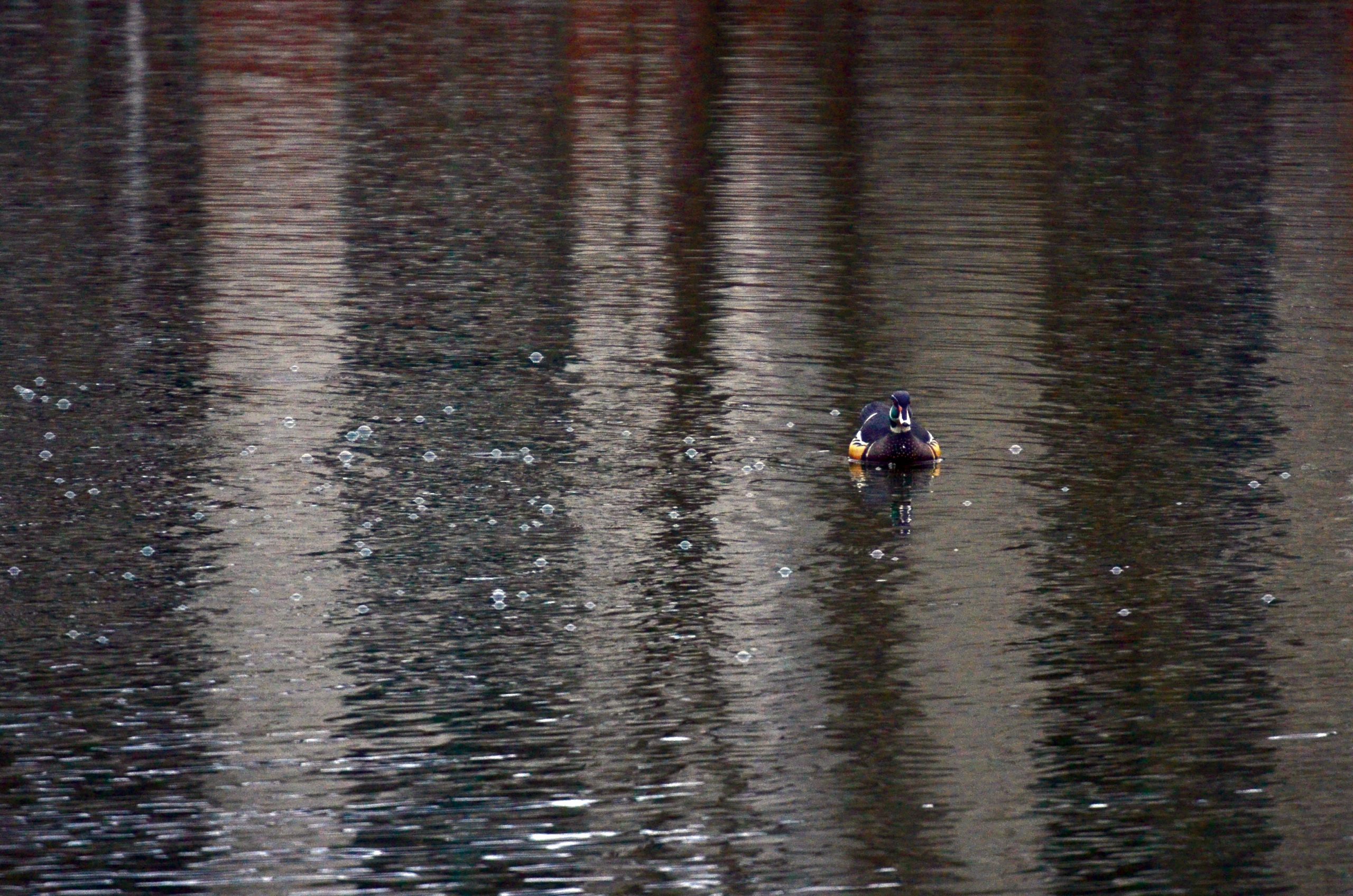
When students walk around campus either to classes, to get food or back to their dorms, they might not always notice, but Keene State is full of life.
Generally, many of the species of animals which are in New Hampshire are found around campus and in its surrounding areas, according to Scott Semmens, an environmental studies, geography and sustainability professor.
Semmens said he sees all kinds of evidence of animals around campus when he goes out.
The areas around campus are home to different species of rodents, birds, foxes, bobcats and maybe the rare occurrence of a moose passing through.
“It’s amazing the variety that we get here,” Semmens said.
With Keene State’s own mascot being an owl, Semmens said he has seen owls around campus.
“We’ve actually had a barred owl right here in the atrium [of the science center] last spring,” Semmens said. Additionally, he said he thinks there might be bighorn owls around.
As for birds, Karen Seaver, another environmental studies, geography and sustainability professor, said there are a lot of “year-round residents.”
Crows, house sparrows, chickadees and American robins can be found around campus throughout the year.
Seaver said American Robins are an interesting addition to the bunch because they are traditionally migratory birds.
“Some populations of Robins are starting to not migrate or not migrate as far … we often see them close to our buildings because they like the heating exhaust vents [in the winter].”
Seaver said the best time to go out and see some animals around campus would be either dawn or dusk, which is when they are most active.
“Just observe and enjoy, you know, keep a respectful distance,” Seaver said.
Similarly, Semmens said to not harass them and to be mindful, especially in the winter time, when animals should not be exerting more energy than needed.
He said one way to go about observing animals is to take it slow. If an animal spots you, they are likely to make a call to alert other animals in the area. When that occurs, take a break and wait for the animal to calm down, they will allow you to proceed into the animal’s space.
“Go out and find a place to sit and relax, especially on the edges of the forest and even along the riverbanks,” Semmens said. “If you do that day in and day out, eventually, you are going to see some of these animals moving by.
There are also several plant species around campus as well, from different types of trees to flowers, however, with winter still here a lot of them are not active.
“A lot of plants have to hang through the winter … they have to die or deal,” Seaver said.
However, during all other seasons, students can see fully bloomed trees and plants that survived.
Joe Britton, supervisor for grounds, said the school has a database of all the trees on campus. The school has over a thousand trees that are tagged around campus.
Starting in 2002, by the then-supervisor for grounds Bud Winsor, an inventory of the trees was kept to allow for easy management of specific trees and to know what is on campus.
On some trees around campus, students can scan a QR code and it will give them all the information on that specific tree.
“If there’s a limb hanging over the walkway, they can say, ‘Hey, tree 307 has an issue’ and I can go back to this database and remedy that,” Britton said.
Regarding managing these trees and different plants around campus, Britton said they try their best to keep invasive species at bay so it does not hurt the local environment. However, it can become difficult because a lot of trees around campus are dedicated to loved ones. So, Britton said he tries to negotiate with the family to offer a different tree more native to the area, if that invasive species becomes a problem.
Additionally, Britton said they produce their own mulch so it is as natural to the environment as possible.
“It’s more mimicking [to] the forest floor than regular mulch that you see,” Britton said.
As for managing the lawns, they have specific areas designated as “delayed mowing areas.” This allows butterflies and other pollinators to stay in those areas and do their job as pollinators.
Britton also noted they use all organic materials to manage the grounds.
“We’d rather sacrifice a few weeds in the lawn than having to spray chemicals and cr** everywhere,” Britton said. “… it would drive me nuts if we just played along and then you get kids laying out there in the blankets it just wouldn’t be a good feeling.”
Additionally, he said they don’t maintain too close to Brickyard Pond and the Ashuelot River running through parts of campus.
For students who might want to look to see what trees are around campus, they can visit the arbor scope website, Britton said. On the site, students can know the species of the trees, find out what number the tree is and if there is a problem they can email him or contact campus safety and they will let grounds know.
Tim Bruns can be contacted at
tbruns@kscequinox.com