

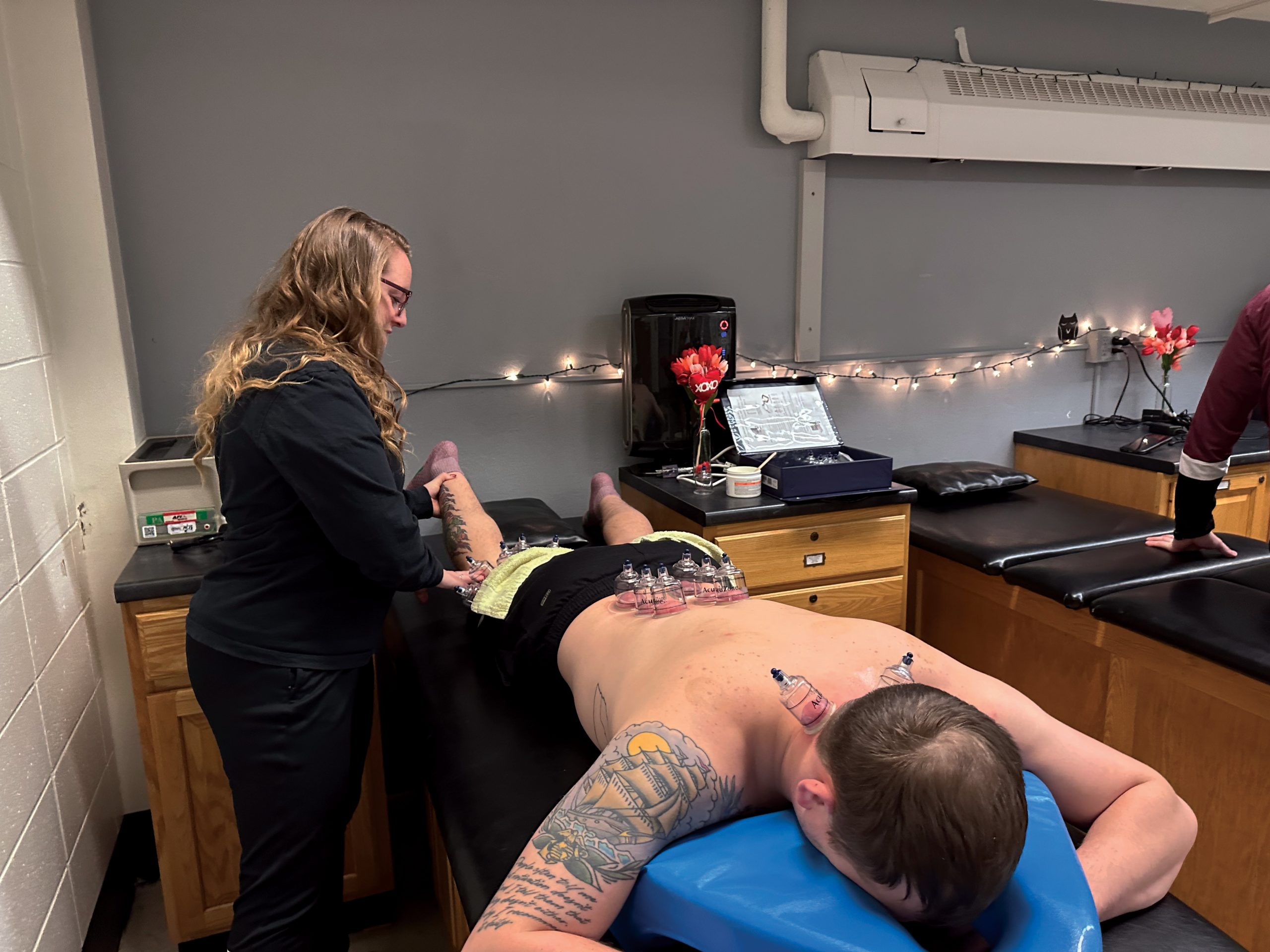
When an athlete at Keene State hears they may be out for the season due to an injury, there is a team of professionals ready to tackle the situation.
“After I’m made aware of an injury, my initial goal is to try to control the amount of pain that the patient is in,” said KSC Athletic Trainer Kristen Paulius.
Paulius sees a variety of athletes weekly including men’s basketball, golf, softball and newly added esports.
“This year I would say that I have seen a lot of wrist injuries meaning they have fallen on their wrists,” Paulius said. “Another variety of injuries that I’ve seen this year is a lot of ankle injuries, usually a lot of sprains that we get across all populations.”
According to Paulius, wrist tension is the most common injury with esports.
“They overuse their wrists … some elbow pain and then also some postural work, back pain as well is very common in esports specifically.”
In order to aid the athletes, Paulius creates a plan with the athletes along with goals to be accomplished throughout the recovery process.
“We’ll start to do rehab to focus on strengthening certain impairments … Doing a strengthening program or a stretching program to make sure the muscles are properly activated,” Paulius said. “It’s very situation based, not every plan is the same and it’s dependent upon the patient’s goals and what they’re trying to achieve.”
In addition to athletes taking good, physical care of themselves, she tells them to value themselves outside of the sport. “I basically tell them to try to live their life outside of the sport pain-free,” Paulius said. “The sport is obviously important, but them is too, the patient being able to live their life outside the sport is, I would argue, the more important [factor].”
Athletic Trainer Cassie Cyr works with athletes on the men’s soccer, cross country and track and field teams.
“For track, hamstring strains and hip flexor strains are the two biggest ones that I see,” Cyr said. “Most of the time people think of soccer with ankle injuries or knee injuries, but it’s really more of soft tissue, hamstring and muscular strains.”
Since joining Keene State two years ago, Cyr has seen a huge amount of track and field and cross country athletes experiencing shin splints.
“It definitely doesn’t help that we don’t have a track so they’re running on the suspension track or outside on the frozen ground pavement,” Cyr said. “I implemented a preventative program for shin splints this year and we’re seeing benefits from that, but that’s a big one.”
Cyr’s preventative program has become a ritual for the cross country and track and field teams as it focuses on working with the small muscles in the feet and lower leg “I talked to [Coach Dan Roark] and we decided to start having all of the sprinters do it as part of their warm up,” Cyr said. The exercises include calf raises, and other stability strengthening for their lower body. “If the facilities can’t change, then we have to do something different,” Cyr added.
Nicole Dumont can be contacted at
ndumont@kscequinox.com