
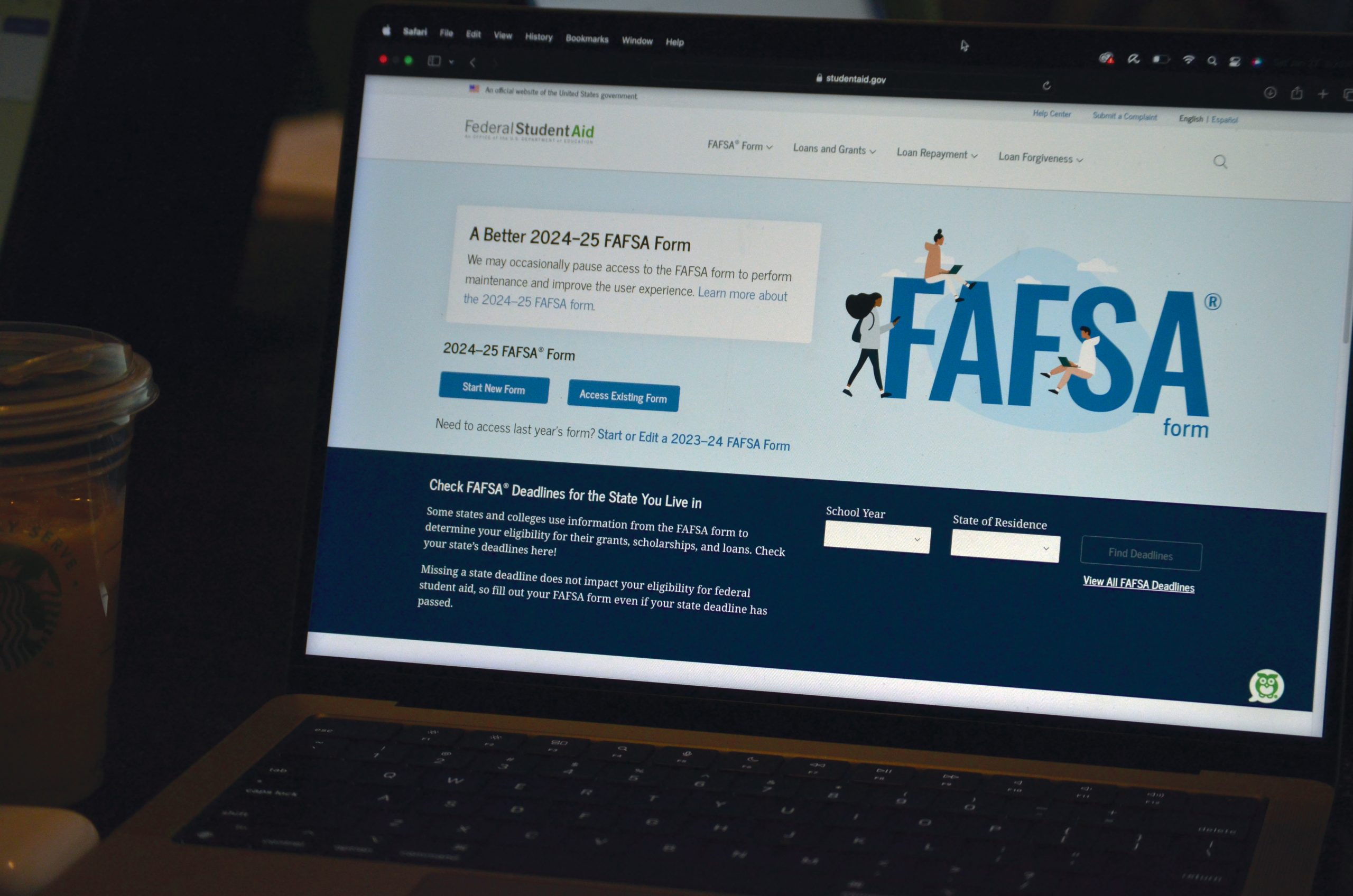
The rollout of the new Free Application for Federal Student Aid (FAFSA) has been difficult to grapple with for KSC administration.
Cathy Mullins, who serves as director of financial aid and scholarships, said the most prominent changes to the form were a reduction in the number of questions from 100 down to 50.
“The other thing that’s making [the form] particularly easy and simple is that families, whether it’s the student or a parent/contributor, now is required, if they can, to have their tax information from the IRS ported over to their FAFSA,” Mullins said.
Being able to pull more information from tax returns makes the process easier than manually inputting certain numbers.
The new FAFSA form was rolled out on Dec. 31, 2023, and shortly thereafter issues arose. According to a Jan. 2 Forbes article, the U.S. Department of Education had to walk back the rollout, instead calling it a “soft launch,” to allow website maintenance. Due to the high volume of traffic after the form was released, there had been many reports of the site crashing.
“The first week that came out it was pretty spotty, it was up-and-down in terms of anybody’s ability to complete the form,” Mullins said.
Making changes to the form has also been problematic for students and families. “What we’re finding is that most students or families are having a problem going back in to make corrections, or if they started it and then needed to go stop the process and log back in to complete it, they’re not able to,” she explained.
With a late and rocky rollout, the Student Financial Services Office will not have access to any information on the FAFSA until late January, but even that is in question.
“It is definitely having a huge effect on colleges across the country in terms of being able to communicate financial aid information to prospective applicants or students that have accepted and are trying to decide where they want to enroll in college next fall,” Mullins said.
Director of Admissions Peg Richmond said the late release of the form has put a
strain on prospective families.
“The biggest consequence is that it’s giving families less time to plan and make decisions,” Richmond said. “We’re prepared for that, we’re prepared to work with students later in the spring, and possibly listen to every person’s circumstance,” she explained.
In addition to students and families, financial aid staff will have to grapple with receiving information much later.
“In the past, they were able to start reading and making and doing the awards as early as November. They don’t even have the information from the Department of Education yet to be even awarding any students. They’re already three months behind and the last thing they want to do is put more pressure on families,” Richmond said.
One of the strategies being deployed to tackle the change is hosting several webinars in conjunction with both the admissions and financial aid teams.
“We have four more over the next month so we’re doing these constantly about understanding your award,” Richmond noted. Additionally, the financial aid office has tabled in the student center to inform current students to complete the form.
One major difficulty that KSC is grappling with is the resources of private schools compared to public ones. “Private colleges and universities have this other form called the CSS Profile and what they’ve done is they’ve taken the CSS Profile … and they’ve been able … to make a really good estimate on what students will receive when they fill out the FAFSA,” Richmond said.
The key concern with the CSS Profile is that it would sway some students, who are able to afford it, toward a private school if they are able to deliver financial aid estimates sooner than a public university, Richmond said.
However, Mullins said that a change to the FAFSA formula that allowed for inflation adjustment was not updated correctly, meaning that even if the information was released expediently, it would be incorrect.
“Even those schools that are using the [CSS] Profile, their information could still be incorrect that they’re giving to students because the formula that they’re using did not allow for inflation,” Mullins explained.
In turn, KSC is releasing partial award letters containing scholarships that they offer relating to merit scholarships, housing scholarships or a visit scholarship.
So far, KSC has not moved back the Mar. 1 priority deadline for FAFSA, but Mullins said that they might, depending on circumstances.
“There’s potential that we would revisit that depending on how late everything goes,” she said.
Nathan Hope can be contacted at
nhope@kscequinox.com