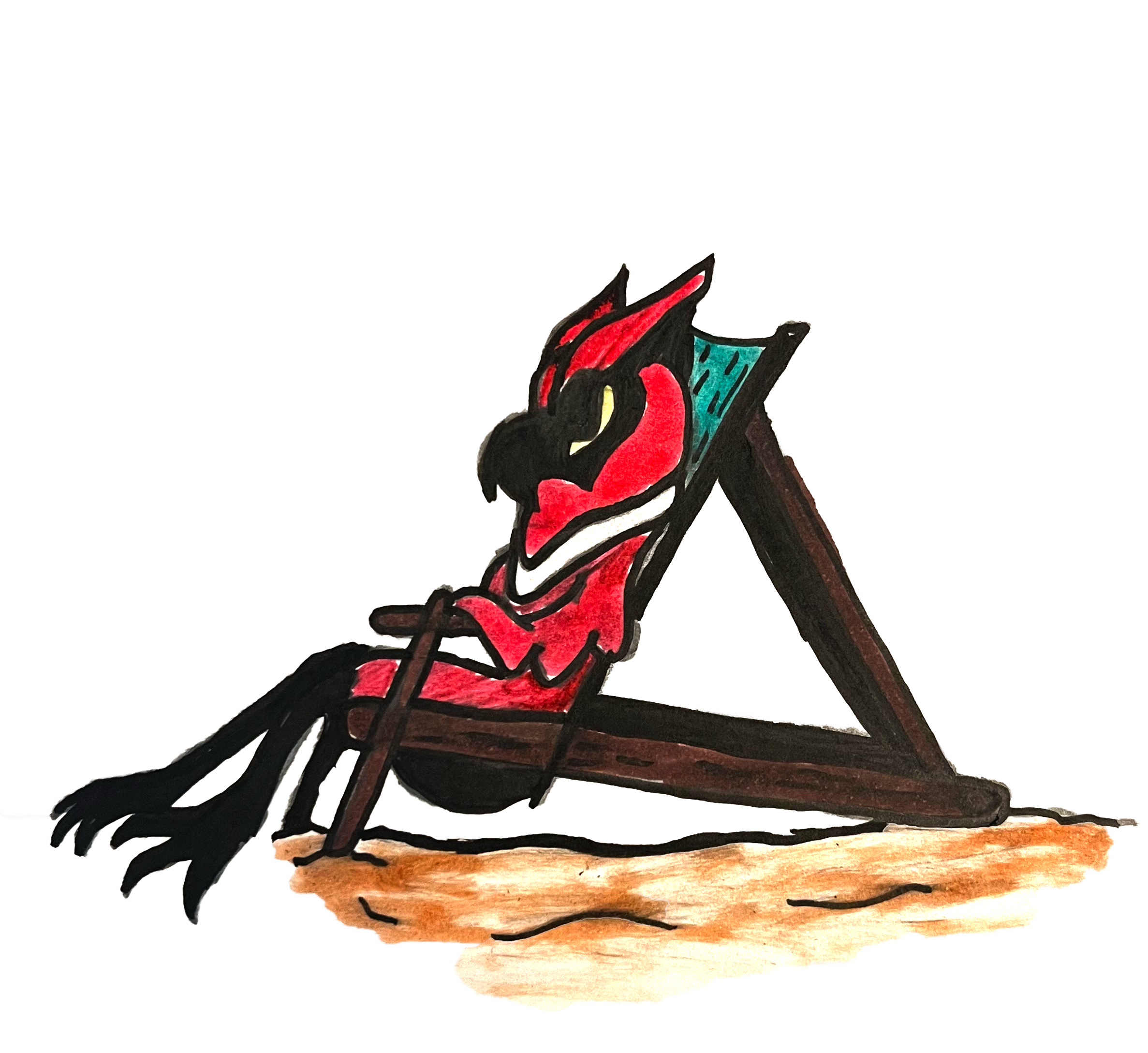
Following clarifications from the New England Commission of Higher Education (NECHE) regarding Keene State’s credit hour gap, KSC President Melinda Treadwell is floating the return of Hootie Days.
In the previous 2022-2023 academic year, concerns were raised in the KSC Senate about the college falling short of NECHE’s requirements for accreditation in terms of credit hours, or time spent in the classroom. Calculations then made by Accreditation and Assessment Officer Kim SchmidlGagne showed the college falling short of NECHE’s 60-hour class time requirement for a semester.
Following the findings, the KSC Senate’s Academic Standards Committee, which is tasked with academic calendar changes, began discussions on how to address the credit hour gap.
The Equinox previously reported in an Oct. 5 article that the committee was largely looking at tweaks to finals week, specifically Reading Day, the Monday of finals week that students traditionally have off to study, to regain contact hours. “The questions out of the senate made us go to NECHE and ask [for clarification regarding credit hour requirements],” Treadwell said.
Treadwell explained that the root of the issue lay within the differential interpretation of the requirements.
“The standards a r e n ’ t prescriptive, other than [NECHE] being one of the only creditors who say 100 credits is the Bachelor’s degree,” she said. Treadwell, who also serves as a NECHE commissioner, said the college was told it was within the credit hour standards set forth by the commission, with the only outstanding issue revolving around on-campus internships. “The one thing that we remain needing to attend to is the way to include equivalency credits for our internships,” Treadwell said.
Now that KSC is largely in the clear in terms of credit hours, Treadwell said she plans to ask NECHE if it would be feasible to bring back Hootie Days. In years past, a Hootie Day was a day outside of the traditional academic calendar holidays and breaks where students were given the day off from classes.
In the 2020-2021 academic year, Mar. 31 was set aside as a Hootie Day, with students being notified of the day off in an email sent the same day by Treadwell. Since then, there have not been any Hootie Days, with concerns about credit hours making the college reluctant to lose any contact hours in the classroom, especially Mondays to Thursdays.
The removal of Hootie Days sparked some pushback from the campus community, with one student starting a petition to bring back the day off, according to an Oct. 19 article from The Equinox.
Treadwell said if she gets the go-ahead from NECHE regarding Hootie Days, she would plan to hold one day each in the fall and spring semesters and that the days would fall on a Wednesday of a given week.
She also noted there would likely be a planned campus-wide event or events held, such as ahike, to allow students to connect outside of classes.
With the possibility of the additional days off, Indigenous People’s Day, which is held on the second Monday of October and traditionally has classes scheduled on it, has come back into the conversation. Treadwell said if she had to pick between having a fall Hootie Day or Indigenous People’s Day off, she would pick the latter.
“It’s not a day to go home but it’s a day to engage differently with lectures,” Treadwell said of Indigenous People’s Day.
Beth Aronson, who serves as assistant director of counseling services at The Wellness Center, said that if done right, a planned Hootie Day or days could be beneficial to students’ mental health. “Students can plan to do what they would want to do, [if] there’s a cool campus event, but I would also say let people rest as well,” Aronson said.
“I think it’s better if people can look forward to them because they’re motivating, then you’re like, ‘There’s that Hootie Day, we just have to make it through Tuesday,’” she explained.
“I think it’s better if you know it’s coming than if it’s like, all of a sudden everybody’s scrambling because they were planning to do things that day and now they have to rearrange,” Aronson said. Aronson explained the issue with how students take mental health days during the semester is that it often becomes a day-to-day choice regarding whether they should attend class, rather than an intentional and planned day off from obligations. “It’s really easy to talk yourself into. Once you do that, it’s really easy to do that all the time and end up in real trouble,” she said.
But if the days are done correctly, Aronson said, “I think that can be wonderful.”
Nathan Hope can be contacted at
nhope@kscequinox.com