
Jackson Kulacz
Equinox Staff
Communication remains among the most significant issues today, as the virus has smothered many hopes for personal contact with others. To solve the crisis, the broader community has turned to platforms like Zoom to stay connected.
Heather Gendron, a graphic design professor at Keene State College, summed up the opening weeks in four words– “a six-week nightmare.” Any knowledge of Zoom and its intricacies was scarce between staff and students alike. Professor Gendron continued, “At first, I had students who said ‘I can’t find the link’ or something.” There were significant learning curves and technical difficulties, with both posing a stressful challenge. According to Chris Wooldridge, the head coach of swimming and diving, “[It was a] hesitant change,” as staff and students were wary about diving in right away.
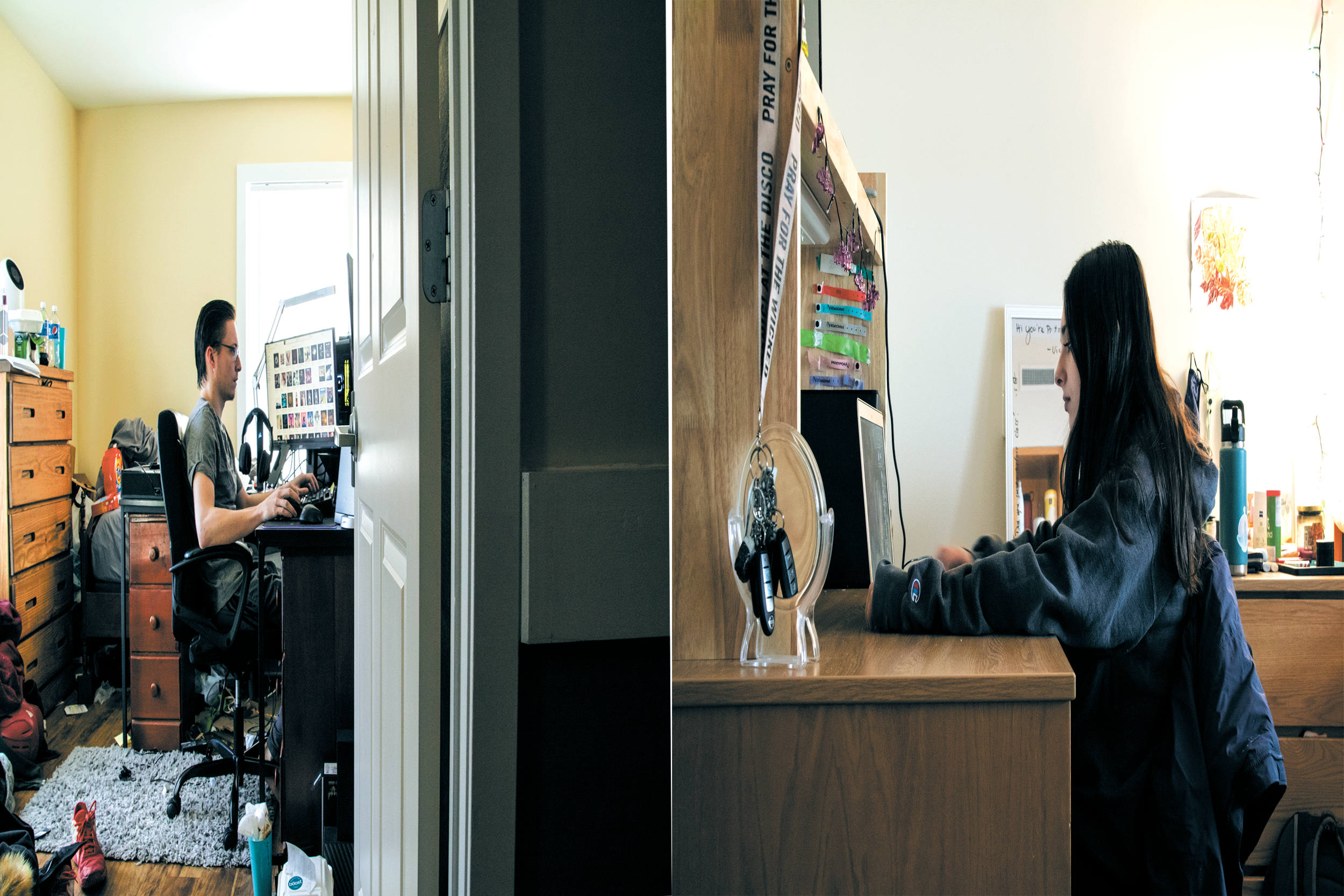
As Zoom usage continued, solving the grander communication problem gave way to its growing pains. KSC junior and education major Sara Getchell described her initial experiences with Zoom classes, “Well, it depends. It was hard to focus when you’re in your dorm,” citing a distinguished lack of physical attachment to the class even now. “[We were] almost discouraged from asking questions,” she said, in regards to the cold atmosphere of early class sessions.
Getchell said physical distancing may work for some major fields, but for others, such as education, the lack of human contact is significantly harmful.
On the contrary, others aren’t quite as fond of broad openness in Zoom classes. Former RA (CA) Ally MacDougal said that “more professors require that cameras are on” during meetings than in semesters prior. She went on to address the potential privacy concerns that came with it. “People have anxieties and I feel like professors are breezing by it,” she said. Perhaps, it’s not that using Zoom is a potential issue but rather how it’s used and regulated.
Sarah McGregor, a physics and astronomy professor, floated the idea as well, “Every class has its own… solution, right? One solution doesn’t fit all.”
Zoom isn’t perfect, and the problem it addresses has no right answer– but it certainly can come close. “It’s not ideal, but it isn’t the end of the world,” Professor Gendron said, stressing the point. When asked about how things were early on versus how they are now, she responded, “Now everyone’s in class, I have no issues at all.” Coach Woolridge also hopped on that wagon; “Now that I’m comfortable with it, I really like it.” This progressive fondness of Zoom seemed to be the case for the collective community, as, according to the coach, “a lot of things went to Zoom, even sports stuff.”
The broader student body generally holds Zoom in high regard despite the shortcomings and technical difficulties. Sara Getchell summed it up rather plainly; “It’s good for what we have.” Ally MacDougal cited the college’s rapid and forced adaptation of Zoom as a positive step, saying that, “We’re all going to be more… fluent in technology,” with the newfound experience of handling the software.
Even if problems exist today, there’s room to solve them tomorrow. The “six-week nightmare,” as Professor Gendron described, ‘won’t happen a second time.’ Our newfound experience went into fixing the problems of the past year.
Coach Woolridge suggested that Zoom won’t be going away for a while, stating, “I think this is going to carry on. [It] should allow for extra flexibility for us.”
Jackson Kulacz can be contacted at:
jkulacz@kscequinox.com