

Keene State College’s Community Service Office held another international alternative break trip to the Dominican Republic. During winter break, a small group of hand-picked students received the opportunity to help restore clean water for communities in the DR.
The group of 15 included students ranging from first-years to second-semester seniors. The group worked with the global organization Wine to Water to create water filters and increase the awareness of hygiene and sanitation. KSC seniors Bentley Reif and Emily Kenney led the trip.
The typical day during the trip consisted of working in a factory and socializing in surrounding communities, according to Reif. Reif said the students slept in bunk beds in large rooms above the factory.
Contributed photo / Bentley Reif
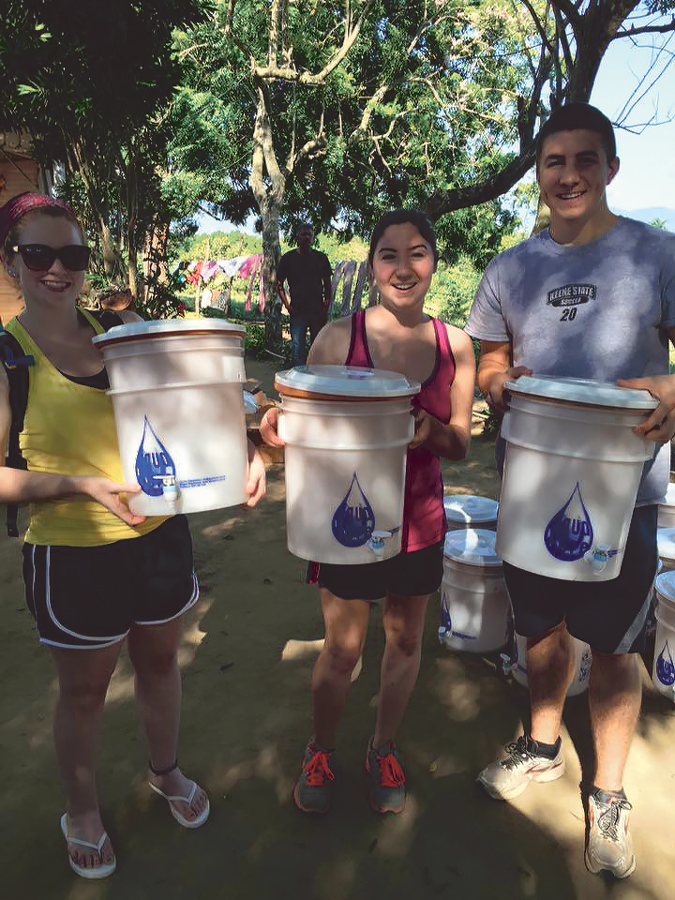
“We literally woke up to the smell of the kiln,” Reif said. He said the filters they created were made of simple ingredients such as clay and silver. The point of the filter was to purify water for families in the DR, Reif said.
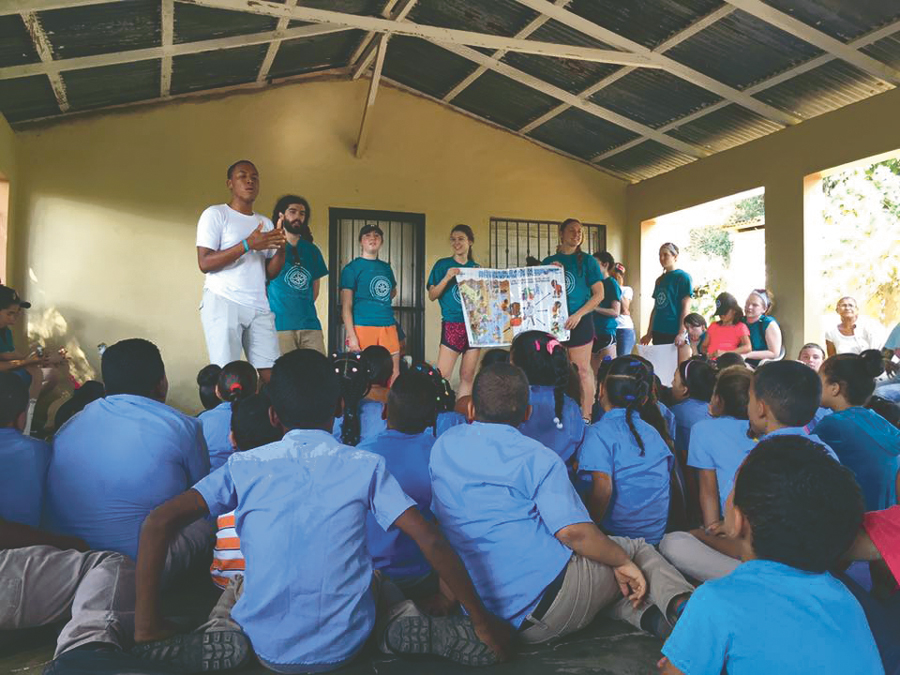
During the afternoon, students headed to the surrounding communities and broke off into two groups. Reif said one group played with the children in the community while others handed out water filters to families in need.
“We showed them how to use it [water filter] and the purpose behind it,” he said. Reif said he really hoped the families would use the water filter because it could prevent illness and diseases.
Students also gathered to demonstrate the importance of hygiene to families. The group collectively came up with over 100 hygiene kits to hand out to the community, Kenney said. The kits consisted of basic hygiene necessities including shampoo, conditioner, floss and toothpaste. “Even some of our dentists helped to supply these necessities,” Kenney said. She said the community welcomed the students with open arms.
The second half of the trip consisted of follow-ups with the families, Reif said. The groups went back into the homes where they had distributed the filters to make sure families were using and cleaning them regularly. The group had reflections every night to discuss their emotions about the trip.
Kenney and Reif both said they were nervous about comparing past alternative break trips to their own, but Reif said it was “a completely new experience as a whole.”
“You don’t go on a trip expecting to make an impact; it was powerful to be able to spread my wealth of knowledge with others,” Reif said.
“I learned that you really need to take a step back and realize what you’re doing,” Kenney said. She said one of her favorite memories from the trip was the impact the students made on the community.
Many students on the trip agreed that the language barrier was one of the toughest parts about the trip.
Contributed photo / Jessica Gagne Cloutier
“It was hard not being able to speak or understand what members of the community were saying,” Reif said. He said not understanding a lot of Spanish was the “hardest road block” he encountered on the trip. “There was definitely an emotional gap,” Reif said.
Junior Victoria Tine and first-year Savannah Bynum are conversational in Spanish, but said they still had a hard time with the language barrier.
“When members of the community started questioning our filters, it hurt to hear their skepticism,” Tine said. She said she was nervous that the families would not take the water filters.
Bynum said it was hard translating for other members of the group.
“It was hard being relied on so much in the factories and community to relay messages back and forth,” she said, “Sometimes I just wanted to have my own conversations without having to translate for someone else.”
Bynum and Tine agreed that leaving was one of the hardest parts of the trip as well.
“You make so many connections that leaving really is the toughest part,” Bynum said. Tine said hearing community members asking when the students were visiting the DR next was hard. “I had to tell them that I was going back to the United States, that I wasn’t coming back,” she said.
Students also said they experienced culture shock when they returned to the United States.
Bynum explained that in the DR, no one is on their cell phone. She said that everyone made eye contact and would wave hello during passing.
“When I walk down Appian Way I see people on their phone trying to avoid eye contact with others,” Bynum said. She said she realized how appreciative she is of eye-to-eye communication.
“Material things didn’t matter as much, everyone was friendly,” she said.
Reif said his experience in the DR changed his perspective of the way he lives.
“I was unpacking my suitcase and I was overwhelmed by the amount of stuff I had. I wanted to give it all way,” he said.
Reif said he believes the living situation of poverty is only the materialistic side to it.
“When you talk about community, love and passion for one another, these communities that we went to were more rich than we are in our society,” Reif said.
He said having the acceptance of the community made the trip easier.
“Having over forty members of the DR community come together to collaborate and learn isn’t something you see every day,” he said. He said it was important to him that members of the community trusted the students.
“A child came up to me and told me I made his stomach feel better, because he was using the filter,” Reif said, “It’s just an experience you never forget.”
MacKenzie can be contacted at mclarke@kscequinox.com