With cold temperatures and daylight seeming shorter, Keene State College students may feel as though warmer weather is never going to arrive.
However, it is important to make sure that this feeling isn’t a more serious problem.
During this time of year students can experience what is known as the “February Blues,” which is associated with feelings of longing for warmer weather and the start of something new, according to an article on Selfgrowth.com.
Similar to the “February Blues” is Seasonal Affective Disorder, also known as SAD.
The difference between the two is that the blues is often a minor mood change while SAD is a disorder.
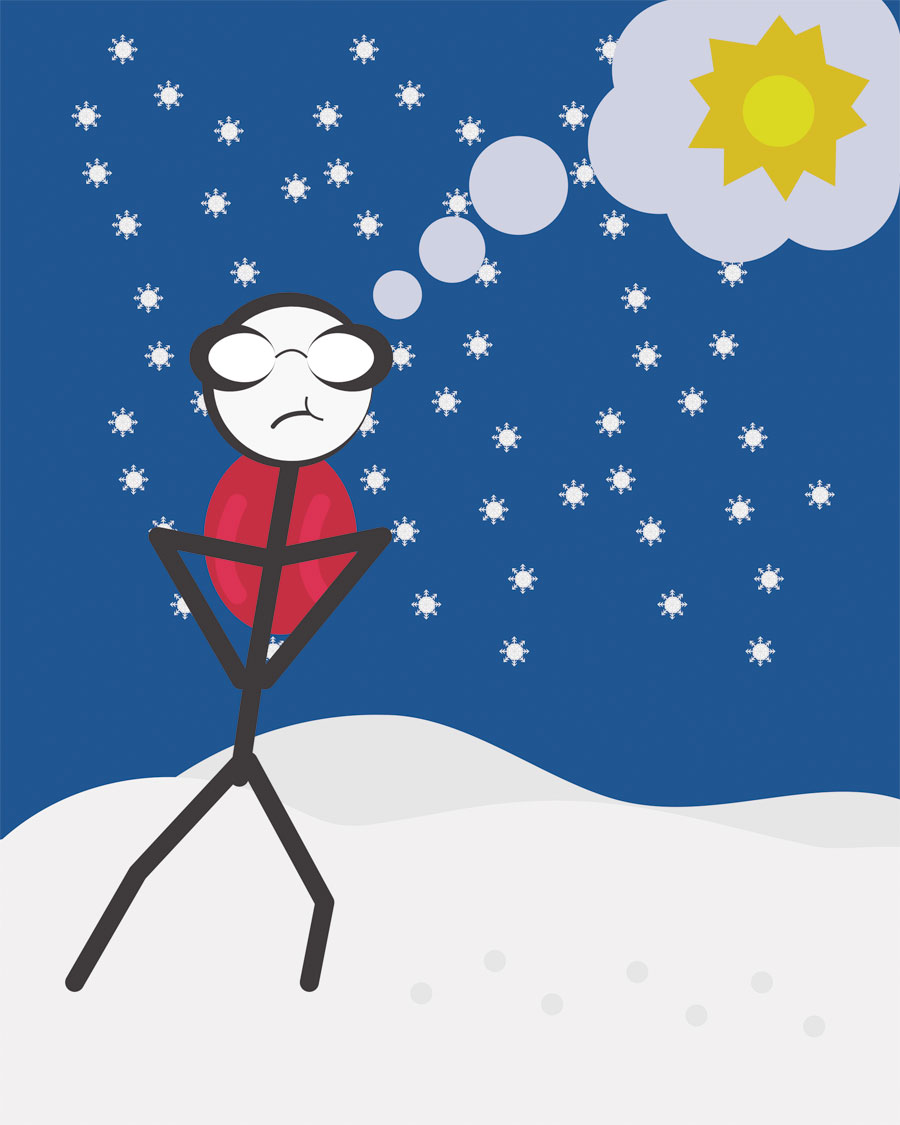
Philip Bergeron / Graphic Design Editor
Due to the “February Blues,” each year in February millions of people report various symptoms and work productivity goes down, according to an interview done by Purdue students with psychologist and author Rachel Elahee.
SAD, on the other hand, is accompanied by a feeling of depression induced by the weather conditions during the winter, according to the National Institute of Health [NIH].
Sometimes people refer to these two as one and the same.
There are a few reasons people experience “February Blues” and SAD, including the lack of sunlight hours, spending more time inside, losing the ability to do things outdoors and feeling let down after the holidays.
Some students here at KSC have found ways to help not feel as down because of the weather.
KSC student Hannah Elliott said she doesn’t find herself feeling down during the winter.
She said, “I find I can keep myself busy with winter activities such as skating and snowshoeing.”
Elahee said finding activities to do outdoors can help some people because it removes the feeling of being cooped up inside and experiencing “cabin fever.”
It becomes important during the winter to get outside and be in the sun as much as possible once people start to feel trapped indoors.
This is a sentiment expressed by KSC senior Nick Garrity.
Garrity said, “Staying inside for most of the day can get pretty dull, so I notice I’ll get kind of feeling down until the spring.”
He expressed a strong dislike for the colder weather as well.
To try and cope with the cold, Garrity said, “I’ll usually distract myself for the winter months and count down the weeks until the warmer weather starts.”
Students said staying busy was a key method in helping them avoid bad feelings about the winter.
Keeping occupied helped keep students’ minds off the winter and the mood-downing effect, they said.
KSC student Alexa Beliveau said she did notice her mood was different during the winter.
Beliveau said, “I totally can see a difference in my mood when the weather is not so great.”
She said that she feels generally more tired and has more trouble getting out of bed in the winter, both of which are commonly associated with the “February Blues.”
In order to combat this Beliveau said, “I go out with my friends and I try to go to the gym to feel better.”
Staying active is an important way people help themselves feel better in general, and it also helps beat SAD.
It’s important to remember that the “February Blues” and SAD are rather common conditions that many people experience.
The NIH suggests some other ways to treat these feelings include light therapy, talking to a counselor and keeping busy with positive experiences and activities.
It is important that if someone suspects they are suffering from more severe SAD that they don’t just ignore it.
Dave Padrazo can be contacted at dpadrazo@keene-equinox.com